
Foods to Avoid While on GLP-1 Treatment

There is no universal list of foods that everyone taking a GLP-1 medication must avoid. However, certain foods and eating patterns may make common gastrointestinal side effects, such as nausea, bloating, indigestion, diarrhea, or constipation, more noticeable.
GLP-1 medications can slow gastric emptying, meaning food may stay in the stomach longer. This can contribute to fullness and digestive discomfort for some people.
The goal is not to follow a strict "GLP-1 diet." Instead, it is to identify foods that are easier for your body to tolerate while still supporting good nutrition.
What foods commonly worsen GLP-1 side effects?
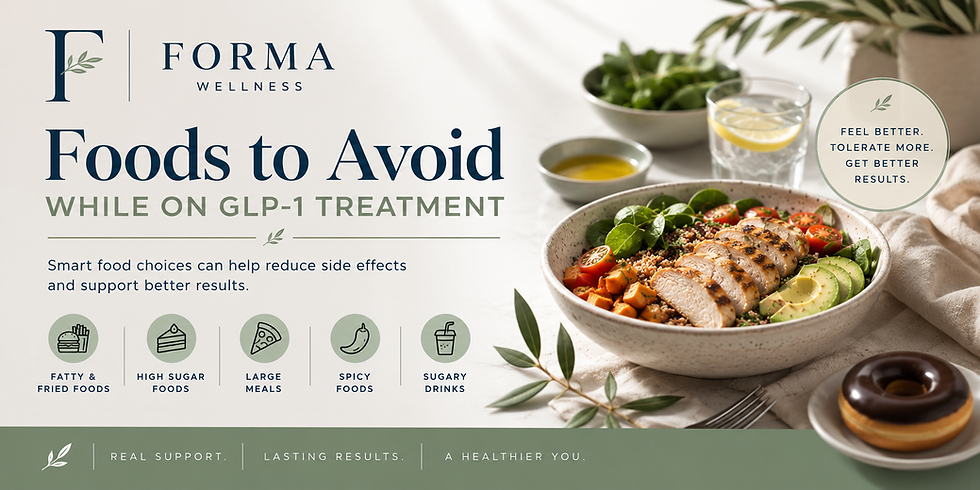
Fried or greasy foods, very large meals, rich or high-fat meals, sugary foods, and spicy foods tend to be the most common triggers for GLP-1-related digestive discomfort.
Tolerance varies, but several types of foods may be harder to digest during treatment.
Fried or Greasy Foods Fried chicken, French fries, fast food, and other greasy meals may feel especially heavy when digestion is slower. For some people, these foods can worsen nausea, bloating, reflux, indigestion, or abdominal discomfort. If a particular food repeatedly makes you feel worse, reducing it may help.
Very Large Meals GLP-1 medications often increase feelings of fullness. Eating the same large portions you were accustomed to before treatment may become uncomfortable. Smaller portions and stopping when you begin to feel comfortably full may be easier to tolerate.
Very Rich or High-Fat Meals Fat is an important part of a balanced diet, so it does not need to be eliminated. However, very rich meals or meals containing large amounts of fat may be more difficult for some people to tolerate, particularly if they are already experiencing nausea or prolonged fullness.
Highly Sugary Foods and Drinks Candy, desserts, pastries, and sugary drinks may worsen digestive discomfort for some people. They can also add calories without providing much protein, fiber, or other nutrients, which may be especially relevant when your overall appetite is reduced.
Spicy Foods Spicy foods are not automatically off-limits. But if you are experiencing reflux, nausea, or indigestion, very spicy foods may make those symptoms more noticeable.
Why do fatty or fried foods cause more issues?
GLP-1 medications delay gastric emptying, so when a very rich, greasy, or large meal moves through the stomach even more slowly, it can leave some people feeling uncomfortably full for longer.
This may contribute to symptoms such as nausea, fullness, bloating, reflux, and indigestion. That does not mean all dietary fat needs to be avoided. The more practical approach is to pay attention to your own tolerance.
Are there foods that can help instead?
Lean protein, vegetables, fruit, whole grains, beans, and moderate healthy fats tend to provide nutrition while remaining comfortable to eat during GLP-1 treatment.
Rather than focusing only on what to avoid, aim for foods that provide nutrition while remaining comfortable to eat. Depending on your individual needs, options may include:
Lean protein
Vegetables
Fruit
Whole grains
Beans and legumes
Fiber-rich foods
Moderate portions of healthy fats
Water and other appropriate sources of hydration
Protein is particularly important during weight loss because adequate nutrition remains important even when appetite decreases. If you are having significant nausea, constipation, diarrhea, or difficulty eating enough, talk with your healthcare provider or a registered dietitian about what may be appropriate for you.
Should you eat smaller meals?
Many people find smaller, slower meals more comfortable during GLP-1 treatment than returning to pre-treatment portion sizes.
General habits that may help include:
Eating slowly
Using smaller portions
Stopping when comfortably full
Avoiding very large meals
Paying attention to foods that trigger symptoms
Maintaining adequate hydration
These are general wellness strategies, not a prescribed medical diet.
What about constipation?
Constipation is a recognized gastrointestinal side effect of GLP-1 treatment. Adequate fluids, fiber-containing foods, and regular movement may help support normal bowel habits for some people. However, rapidly increasing fiber can sometimes worsen bloating or discomfort. Persistent, painful, or severe constipation should be discussed with your healthcare provider.
How does diet affect treatment results overall?
Nutrition remains an important part of medical weight management — FDA-approved weight-management medications in this category are intended to be used alongside dietary and activity changes, not as a replacement for them.
A balanced eating pattern can help support adequate protein and nutrient intake, digestive comfort, hydration, muscle preservation, sustainable weight management, and overall health.
At the same time, GLP-1 treatment should not require an unnecessarily restrictive diet. Nutrition support is part of a comprehensive treatment program, not a replacement for medication or provider guidance.
When should digestive symptoms be reported?
Contact your healthcare provider if symptoms persist, worsen, interfere with eating or hydration, or include repeated vomiting or severe abdominal pain.
Contact your healthcare provider if symptoms:
Persist or continue getting worse
Make it difficult to eat
Make it difficult to stay hydrated
Include repeated vomiting
Include severe or persistent abdominal pain
Significantly interfere with normal activities
Become difficult to manage after a dose increase
Severe or persistent symptoms should not automatically be blamed on something you ate. Your provider can help determine whether dietary changes are appropriate or whether your treatment needs further evaluation.
The Bottom Line
There are no universally prohibited GLP-1 foods to avoid, but greasy, fried, very rich, or very large meals may worsen gastrointestinal discomfort for some people.
Because GLP-1 medications can slow gastric emptying, smaller portions and foods that are easier for you to tolerate may feel more comfortable.
The goal is not extreme restriction. It is to create an eating pattern that supports nutrition, hydration, digestive comfort, and your overall treatment plan.
At Forma Wellness, nutrition support is part of a comprehensive approach to medical weight management and is designed to complement provider-guided treatment.
Learn more about Forma Wellness Medical Weight Loss → See if I Qualify
Medical Disclaimer
This article is for educational and informational purposes only and is not intended to provide individualized medical or nutritional advice, diagnosis, or treatment.
Individual dietary needs vary based on medical history, medications, health conditions, and personal tolerance. Speak with a qualified healthcare provider or registered dietitian before making significant dietary changes, particularly if you have diabetes, gastrointestinal conditions, kidney disease, or other medical concerns.
Do not start, stop, or change a prescription medication based on information in this article. Persistent, worsening, or severe symptoms should be evaluated by a healthcare professional.


Comments